
503 Total views, 2 Views today
By Renas Babakir
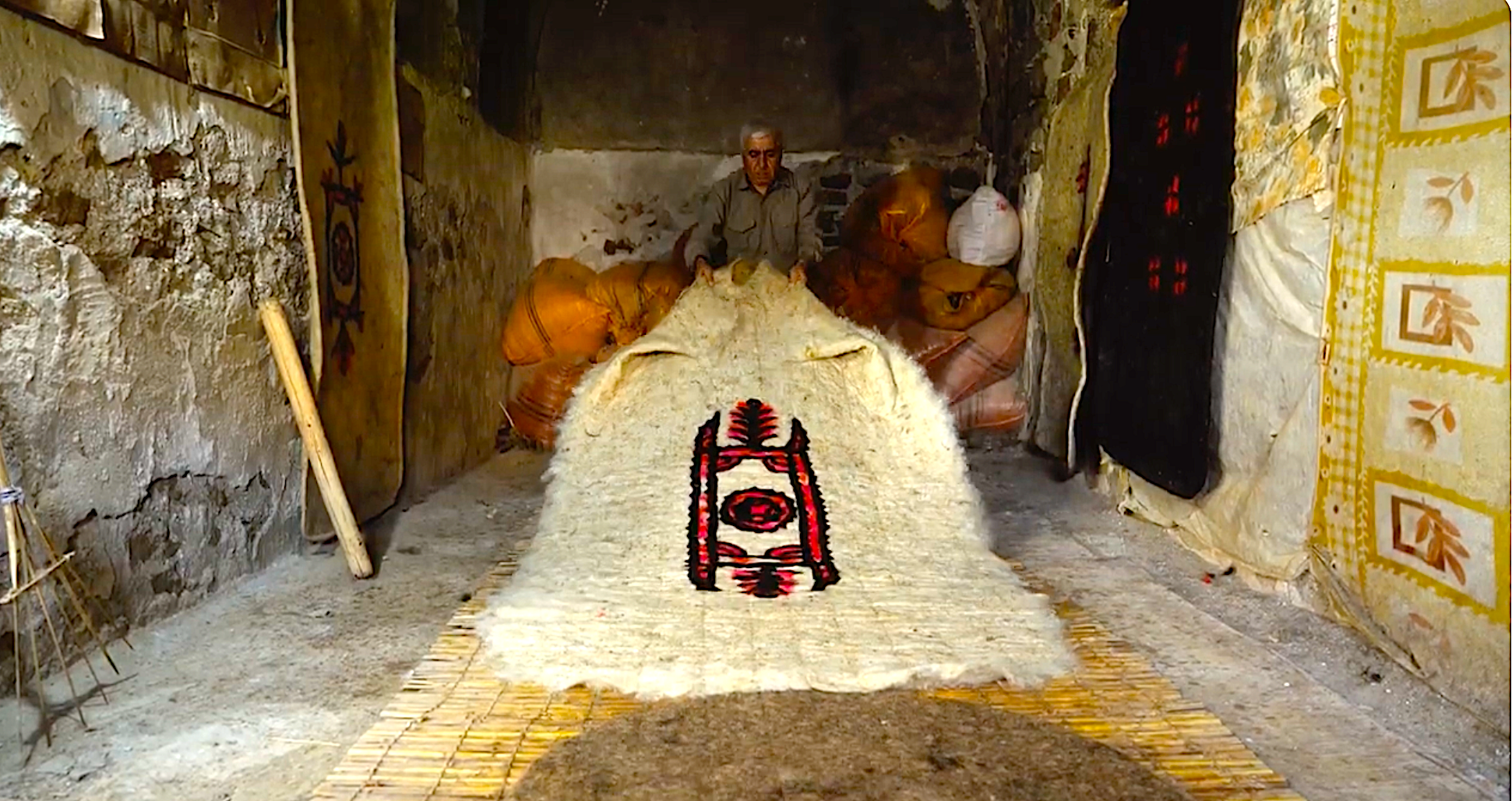
This project documents wool felt-making techniques in Southern Kurdistan. Felt known as “Libad” or “Newg” in Sorani Kurdish and “Kulav” in Kurmanji Kurdish has been made into protective clothing and rugs, such as traditional hats, waistcoats, shepherd’s coats, and narrow rugs known to the community for as far back as they can remember.
The practice of felt-making, which developed alongside the domestication of sheep around 9000-7000 BC in the Zagros Mountains has transcended time and continues to be upheld by the practicing felt-makers living in the region today. The aim of this project is to document the non-woven technique of felt-making from wool by the few remaining practicing felt-makers in Southern Kurdistan, in the foothills of the Zagros Mountains. Felt is considered to be one of the earliest forms of textile. In the past, felt was a very significant fabric of society, particularly in the Fertile Crescent, Anatolia and Central Asia.
It was part of everyday life as well as being used during rituals and ceremonies. Likewise, for the people of Kurdistan, felt was widely used until the mid 1970s; they continued their ancestral tradition and persisted to make and use felt. The traditional method of felt-making and the use of felt garments are still alive among the people of Kurdistan along the Zagros Mountains, but are disappearing due to conflict and political unrest in the region as well as rapid changes in the textile and fashion industries. Despite the historical and cultural significance of felt, there has been a lack of scholarly attention paid to this historical craft in the region.
Licenced under CC BY-NC-SA 4.0 Download the documentary here: https://doi.org/10.25420/britishmuseu…
Rights owner: Yad Deen and Renas Babakir